What Does “THC Not Detected” Mean on a CBD Lab Report?
If a CBD label says “THC-free,” the first place to check is not the front of the package. It is the product’s lab report. A certificate of analysis, or COA, can show whether a laboratory found THC in a tested sample—and how sensitive its test was.
But “THC not detected” does not necessarily mean there is absolutely no THC in every bottle. It means the lab did not detect THC above the test’s stated detection threshold in the sample it tested. That distinction matters if you are choosing a product to avoid THC, are subject to workplace drug testing, or simply want to know what is in a bottle.
This guide explains how to read that result, what to look for in a batch-specific COA, and how broad-spectrum, full-spectrum and isolate CBD products differ. It also covers an important practical point: drug tests and CBD labels do not always tell the same story.
What “THC Not Detected” Means
“Not detected,” often written as “ND” on a COA, means the lab did not measure the named cannabinoid above its limit of detection for that test. The limit of detection, or LOD, is the lowest amount of a substance that a particular test can reliably distinguish from background noise.
For example, a report might show “Delta-9 THC: ND” and list an LOD of 0.01% by weight. That does not prove the sample contains precisely zero Delta-9 THC. It says the lab did not detect it at or above that level using that method.
Some reports also list a limit of quantitation, or LOQ. The LOQ is the lowest level the lab can measure with an acceptable degree of reliability. A result can fall between the LOD and LOQ: the lab may have evidence that a compound is present, but not enough to give a confident numerical measurement. If a report uses “ND,” “
ND is not the same as zero
Three details affect what an ND result can tell you:
- The test’s sensitivity: A lower LOD means the lab can detect smaller amounts. An ND result from a test with a relatively high LOD leaves more room for trace THC to be present below that threshold.
- The sample tested: A lab analyzes a sample, not every unit in a production run. Results may not capture differences between bottles, especially if the product was not mixed evenly or the batch was not sampled appropriately.
- The test method and report: Labs use different methods and may report different THC forms. Look for the method, units, analytes tested and any footnotes explaining results.
So, treat “THC not detected” as a test result with boundaries—not as a blanket guarantee that every unit contains no THC whatsoever.
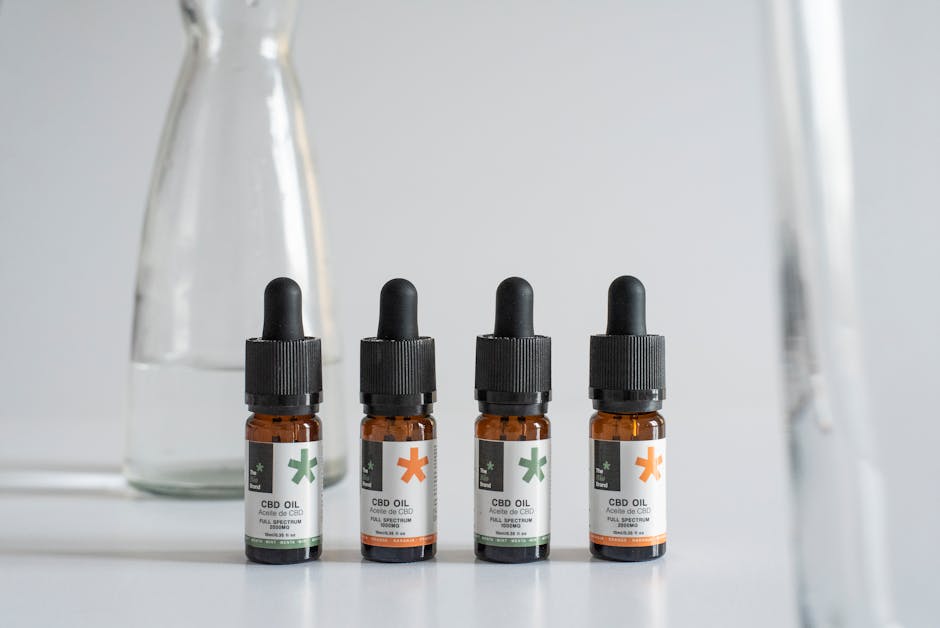
How to Check a Batch-Specific COA
A batch-specific COA is a laboratory report tied to a particular production batch or lot. It is more useful than a generic report that simply shows what one version of a product tested like at some point in the past.
Start with the package. Find the lot or batch number, then compare it with the number on the COA. If the numbers do not match, ask the company for the report for your batch. A QR code can make the report easier to find, but a QR code alone does not verify that the report is relevant or complete.
A practical COA checklist
- Product and batch match: The report identifies the same product type and lot number as the package.
- Independent laboratory: The lab is identified, and the report includes enough information to check its credentials. Accreditation may be useful, but it does not replace reviewing the results.
- Test date and report ID: These help show when the sample was analyzed and which report you are viewing.
- Cannabinoid panel: The report names the cannabinoids tested, including the relevant forms of THC. “Total THC” may be listed, or the report may show individual compounds separately.
- Units and detection limits: Check whether results are in percent, milligrams per gram, or milligrams per serving. Find the LOD or LOQ for THC rather than relying on “ND” alone.
- Other safety tests: Depending on the product, reports may include testing for pesticides, heavy metals, residual solvents, microbes or other contaminants.
- Clear, complete report: Watch for missing pages, unreadable text or a report that does not identify the tested sample. Contact the company if key information is absent.
A COA is a helpful piece of evidence, not a guarantee that a product is safe, effective or identical to every other unit. It tells you what the lab found in its submitted sample, using the listed method and limits.
Broad-Spectrum, Full-Spectrum and Isolate: What’s the Difference?
These terms describe the types of cannabis-derived compounds a CBD product is intended to contain. They are useful shorthand, but they are not a substitute for checking the COA.
Product type What it generally contains THC considerations Full-spectrum CBD and other naturally occurring hemp compounds, which may include minor cannabinoids and terpenes May contain THC within applicable legal limits; check the batch-specific COA Broad-spectrum CBD and some other hemp compounds, with THC reduced or removed during processing Often marketed as THC-free, but trace amounts may remain; verify the COA and its LOD CBD isolate CBD separated from most other hemp compounds Designed to contain primarily CBD; the finished product still needs testing to assess THCIn short, a product’s category describes its intended composition, not a guaranteed lab result. A “broad-spectrum” label does not by itself prove that THC was not detected. Likewise, “isolate” is not a substitute for a batch-specific test.
How Testing and Refinement Affect THC Results
Hemp extracts can be refined in different ways before they are added to an oil, gummy, capsule or other product. Manufacturers may use filtration, chromatography or other separation processes to reduce or remove particular compounds. The exact steps vary by company and product.
Refinement can change the mix of cannabinoids in an extract, but it does not make the finished item self-verifying. The final formulation may involve ingredients, flavorings or production steps that affect what should be tested and how results are expressed. That is why the most relevant report is one for the finished product and matching batch—not only an earlier report for raw extract.
Testing also has limits. A lab analyzes the sample it receives, and the result is tied to its method and stated detection thresholds. If you are comparing products, look at the LOD, units and cannabinoids reported, not just whether the page displays a green checkmark or the Click to find out more words “THC-free.”
THC-Free Demand and Drug-Testing Risk
Many consumers seek products marketed as THC-free because they want CBD without THC. That demand has grown alongside broader interest in hemp products. The 2018 U.S. Farm Bill removed hemp from the federal definition of marijuana under specific conditions, including a federal definition based on no more than 0.3% Delta-9 THC by dry weight. It helped expand the legal market, but it did not make every hemp product legal in every circumstance or eliminate state rules and product-specific requirements.
It also did not make CBD a reliable way to avoid a positive workplace drug test. Many standard drug tests look for THC metabolites, not CBD. A product that contains a small amount of THC can contribute to exposure over time, and labels or test results cannot predict exactly how an individual will respond on a particular test. CBD workplace drug testing Product mix-ups, inaccurate labeling, contamination and differences in use may also matter.
If a positive result could have serious consequences—for example, at work, in a regulated profession or under a testing agreement—the cautious choice is to avoid CBD products that may contain THC. Even a COA reporting “THC not detected” cannot guarantee a negative drug test. Ask the testing program or a qualified health professional about your situation rather than relying on a product label as protection.
The Entourage Effect, in Plain English
The “entourage effect” is the idea that cannabinoids and other compounds from cannabis may influence one another when present together. In everyday terms, it proposes that a mixture of plant compounds might behave differently from CBD alone.
That idea is one reason some people prefer full-spectrum or broad-spectrum products. But it should not be presented as a settled promise that a blend works better. Research is still developing, and the term does not tell you how much of each compound is in a specific bottle—or whether the product will meet your needs. Check the COA and talk with a health professional if you are considering CBD alongside medication or for a health concern.

Common Mistake: Assuming a Missing Price Means a Product Is a Bargain
Some scraped articles and product roundups omit prices. If no product prices are listed in the scraped article, there is no reliable basis for comparing costs or judging value. Do not infer a price from a brand name, an outdated search result or another product size.
Price is separate from the meaning of “THC not detected.” A low-cost product is not necessarily poorly tested, and a higher-priced one is not automatically better. Before comparing value, confirm the exact product, size, current price and batch-specific COA. If the report is missing, mismatched or unclear, ask the seller for the right documentation instead of treating a price—or the absence of one—as proof of quality.
Bottom Line: Read the Result, Not Just the Claim
“THC not detected” means the lab did not detect THC above its stated limit of detection in the sample it tested. It does not prove absolute zero, guarantee that every bottle matches the sample, or promise that a user will pass a drug test.
For a more informed choice, match the package’s lot number to a batch-specific COA. Check which THC compounds were tested, the units, the LOD or LOQ, and whether the report covers the finished product. Broad-spectrum, full-spectrum and isolate labels can help describe a product, but the lab report is where you can see what was measured—and what the result can and cannot tell you.